

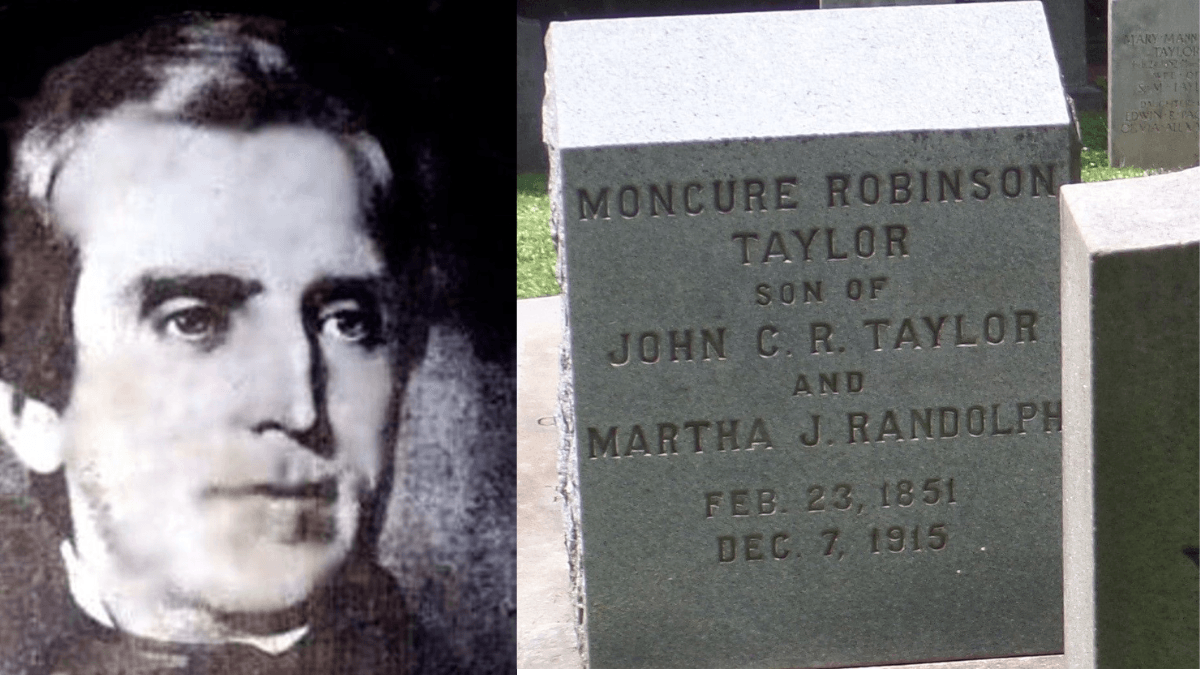
When I examine Moncure Robinson Taylor, I see a historic man or woman whose lifestyles is easier to apprehend via own family history than through headlines. Born on 23 February 1851 in Jefferson County and demise on 7 December 1915 in Charlottesville, he lived through a changing usa and a length fashioned via the Second Empire. His story connects Virginia circle of relatives networks, inherited land, family memory, and the lengthy shadow of the past.
As part of the Jefferson Randolph Taylor Taylor line, he turned into the grandson of Martha Jefferson Randolph and consequently stood inside the direct circle of relatives of Thomas Jefferson, linking his private tale to America and America. Looking past public history, I find his ancient interest in the quieter information of marriages, households, youngsters,
hard work, property, inheritance, and circle of relatives relationships. These details also appear through family histories and public records, where silence can sometimes be as meaningful as what is recorded. His connection to founding households and the founding household of Jefferson’s family helps place him within a wider story of community and American history.
Moncure Robinson Taylor’s Marriage, Family, and Private Life
Looking at Moncure Robinson Taylor through his private life adds another layer to his story. He married Lucie Madison Willis in 1901, bringing a James Madison connection into his genealogy, and their son, John Byrd Taylor, was born in 1903. Because this was a late marriage, records suggest that much of his adulthood had passed in bachelorhood, without a formal household. Modern family researchers have also examined a family legend and later descendant studies involving Rachael Robinson, described as a Black domestic servant in the home, and the possibility that she was the mother of Eva Robinson Taylor.
From my view of historical records, this part of Virginia domestic life needs honesty and caution, because official records do not always explain the full intimate world of race, power, and kinship. The story shows the world of its era revealing how social institutions shaped people and were sometimes carried forward by everyday relationships. It presents Taylor as a complex historical figure, not simply a descendant of great people. The family story and its delicate bequest expose a lasting tension in history.
| Bio Detail | Information |
| Full Name | Moncure Robinson Taylor |
| Born | 23 February 1851 |
| Birthplace | Jefferson County, Virginia |
| Died | 7 December 1915 |
| Death Place | Charlottesville, Virginia |
| Father | John Charles Randolph Taylor |
| Mother | Martha Jefferson Randolph |
| Grandfather | Thomas Jefferson |
| Family Line | Jefferson, Randolph, and Taylor families |
| Spouse | Lucie Madison Willis |
| Marriage Year | 1901 |
| Son | John Byrd Taylor |
| Son’s Birth | 1903 |
| Known For | Family history, land, farming, genealogy, and Virginia family connections |
| Associated Places | Lego, Monticello, Locust Grove, Charlottesville |
| Burial | Monticello |
| Funeral Church | Christ Church |
| Historical Significance | Connected to prominent Jefferson and Randolph family history |
Work, Land, and Public Life
When I look at Moncure Robinson Taylor surviving records suggest that Moncure Robinson Taylor’s public life was not focused on politics, law or war but on land, farming and local life. A historical description places Moncure Robinson Taylor living and farming at Lego, near Monticello while later references connect Moncure Robinson Taylor with Locust Grove in Charlottesville. This picture is different from a courthouse portrait or military monument.
It gives a useful view of Moncure Robinson Taylor’s connection to the past and the practical world of crops, property and household management. In Virginia families of Moncure Robinson Taylor’s class land could be more than an asset. Land could represent identity, memory and a physical link to a family story like a ring carries a fingerprint. Moncure Robinson Taylor’s financial details are less certain because the available material does not provide a ledger of wealth,
an inventory of assets or detailed receipts. Instead, the circumstantial evidence comes from the farm, residence, family standing, marriage connections, and burial among the old family grounds. That absence of exact financial records is important because some lives are documented through numbers, while others are preserved through relationships and the places they left behind.
Death, Burial, and Memory
The final chapter of Moncure Robinson Taylor’s life came after a long illness, when he died on December 7, 1915. He was buried at Monticello after his funeral at Christ Church, and the death setting adds another layer to the narrative of his life. From my perspective, the environment, place, faith, and family memories connected with his grave help explain why his name remained part of a lengthy series of Jefferson, Randolph,
and Taylor family addresses. I notice he was not remembered for celebrity but for a special kind of genealogical gravity standing at a crossroads of the Jefferson Randolph, Taylor and Black family histories that later generations continued to preserve. His story works like a living archive node, where each archive, branch and name can open doors into wider family histories.
Conclusion
Understanding Moncure Robinson Taylor means looking carefully at his family members and the connections that shaped his existence. His father, John Charles Randolph Taylor, endured the paternal line and family name into the nineteenth century, whilst his mother, Martha Jefferson Randolph, formed a direct bridge to Thomas Jefferson and the Randolph inheritance. Thomas Jefferson Randolph and Jane Hollins Nicholas, from one era in advance, additionally helped form the family from which Moncure emerged.
His siblings reveal the varied nature of elite Virginia kinship: Bennett entered public life, Susan formed a marriage alliance, Jefferson Randolph entered the ministry, and Edmund built a family of his own. Jane and Cornelia remained connected to the old domestic world, while the younger brothers who died young show how fragile lineage could remain, even within a powerful family. The later story includes Lucie Madison Willis, whose late marital chapter brought a child, John Byrd Taylor, into the more clearly documented nuclear family of his later life.
At the same time, the Robinson line, including Rachael Robinson and the descendant tradition surrounding Eva Robinson Taylor, adds another important layer. From my perspective, this is where formal genealogy meets the hidden architecture of the household. It is not simply a side note to the story, because these relationships form part of the whole family history and help explain the wider network surrounding Moncure Robinson Taylor.
FAQS
Who has become Moncure Robinson Taylor?
Moncure Robinson Taylor came to be a Virginia-born member of the Taylor family. He become connected via his mother, Martha Jefferson Randolph, to the family of Thomas Jefferson.
When changed into Moncure Robinson Taylor born?
Moncure Robinson Taylor was born on 23 February 1851 in Jefferson County.
Who has become Moncure Robinson Taylor’s mom?
His mother has become Martha Jefferson Randolph, a granddaughter of Thomas Jefferson. This connection placed Taylor within the wider Jefferson and Randolph family network.
Who did Moncure Robinson Taylor marry?
He married Lucie Madison Willis in 1901. Their son, John Byrd Taylor, have end up born in 1903.
Where did Moncure Robinson Taylor live?
Historical references connect him with Lego near Monticello and later with Locust Grove in Charlottesville, Virginia.
What has come to be Moncure Robinson Taylor mentioned for?
His existence is specifically documented through his family connections, land, farming, family life, and family tree in a region of a substantially documented public profession.
When did Moncure Robinson Taylor die?
He died on 7 December 1915, after an extended contamination.
Where did Moncure Robinson Taylor buried?
He was buried at Monticello following his funeral at Christ Church.
Why is Moncure Robinson Taylor traditionally exciting?
His story connects numerous critical Virginia own family traces, at the side of the Jefferson, Randolph, and Taylor families, making him a beneficial hassle for genealogical and own family-records research.
