

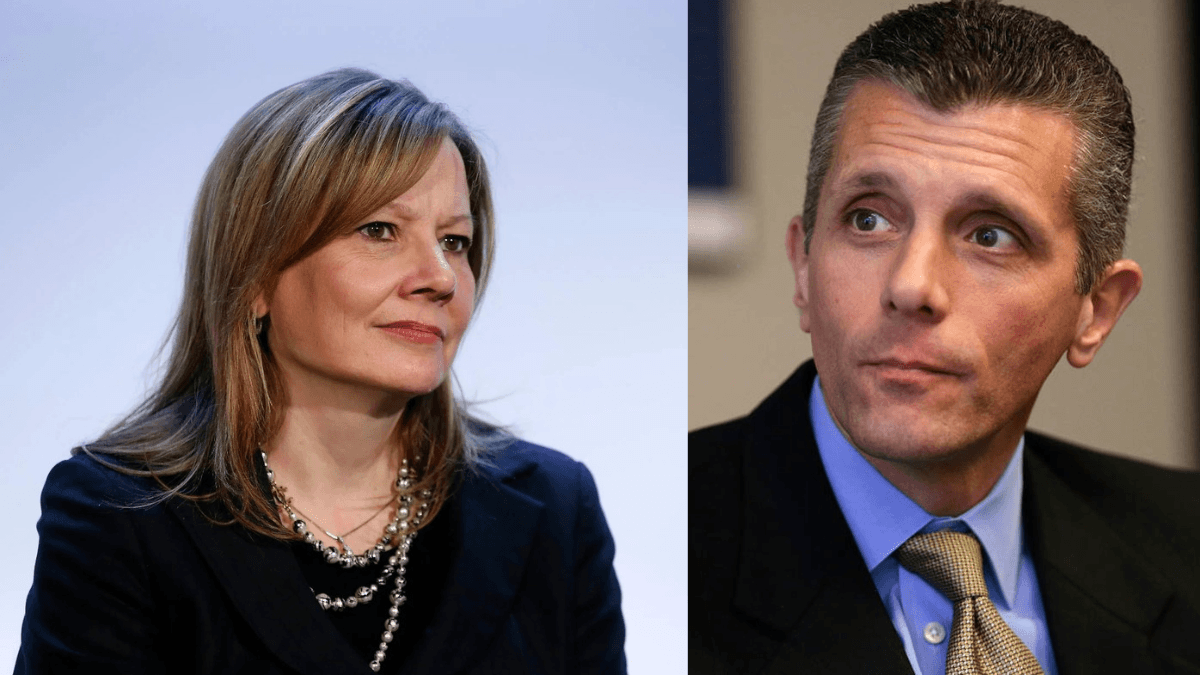
When I look at how electric vehicles, software, and connected technologies are reshaping the automotive landscape, Barra is the name that comes to mind first, and her story reads best next to that of Cordani, who works in healthcare. Both are executives whose careers show that successful leadership depends on industry knowledge, thoughtful decision-making, and paying attention to customer expectations that keep evolving. Mary Barra leads General Motors, also known as GM,
one of the best-known automotive manufacturers among American companies, while David Cordani leads The Cigna Group, an insurance organization with a big role in health services. In insurance, his focus has been on affordability and improving access to healthcare, which in the wider world of healthcare services means making care easier to reach and easier to pay for. Their professional responsibilities are not the same,
yet in different industries they both deal with organizational challenges, changing markets, and technological developments through strategic planning, accountability, and clear communication. What I find most useful in their insights is how each one handles business transformation with adaptability, which sits at the heart of corporate leadership and of leadership in general. Seen together, these business executives show that good decisions in a car company and a health company start from the same habits.
How Mary Barra and David Cordani Shaped Their Careers
David Cordani spent his career in healthcare, and at Cigna he developed a real feel for how the insurance world works across several sectors. His experience has involved navigating healthcare regulation, managing organizational priorities, and expanding services well past traditional insurance and basic insurance coverage. Any new regulation changes the priorities inside a company, so expanding the services it offers is never simple,
and the insurance sectors reward leaders who stay steady under that pressure. Mary Barra took a very different road. She built her career in the automotive industry, where her professional background in engineering and manufacturing came before she became chief executive of General Motors. That experience helps her understand the operational challenges of producing vehicles,
along with all the other challenges that come with running a company that makes vehicles at scale. It also shaped how she works on developing the business and handles management, while preparing the industry giant for technological changes and the other changes coming down the road. What stands out to me when I put the two side by side is how much each leader’s early work shaped the way they handle pressure later on.
| Detail | Mary Barra | David Cordani |
| Industry | Automotive | Healthcare and insurance |
| Company | General Motors (GM) | The Cigna Group |
| Current role | Chair and CEO | Executive Chair (since 2026) |
| Joined company | 1980, as a co-op student at Pontiac Motor Division | 1991, after working at Coopers & Lybrand |
| Education | Bachelor’s degree in electrical engineering (1985) from General Motors Institute, now Kettering University; MBA from Stanford (1990) | Accounting degree from Texas A&M University (1988); MBA from the University of Hartford |
| Career background | Engineering, manufacturing, human resources, product development, purchasing, and supply chain | Finance, operations, customer segments, and health-care management |
| Role before becoming CEO | Executive vice president of Global Product Development, Purchasing and Supply Chain | President of Cigna HealthCare and chief operating officer |
| Became CEO | January 2014 | 2009 (president in 2008) |
| Became chair of the board | 2016 | January 2022 |
| Notable fact | First woman to lead a major global automaker | Served as CEO for nearly 17 years |
| Recent change | Still holds the combined Chair and CEO role | Retired as CEO effective July 1, 2026; Brian Evanko succeeded him |
| Focus areas | Electrification, software, and autonomous driving | Affordability, access to healthcare, and diversified health services |
Why Long-Term Planning Matters
For both executives, successful transformation depends on setting realistic priorities and evaluating progress over time. Transformation never happens in one quarter, and the priorities a team picks on day one rarely look the same a year later. Progress is also easy to misread, which is why executives need to check it often. Long-term planning is essential when organizations undertake significant structural changes, because good planning touches every part of the company. On the automotive side,
automotive technology needs research, engineering, manufacturing adjustments, and infrastructure development. In healthcare, healthcare services may need new digital systems, operational improvements, and easier ways for customers to access information. Each piece, from manufacturing and infrastructure to technology, digital systems, operational upgrades, and development work, brings its own adjustments, improvements, services, and information needs. Every one of those changes adds up to structural changes that no team can rush.
The experiences of Mary Barra and David Cordani demonstrate why businesses should balance immediate results with future opportunities. Focusing only on short-term performance makes it difficult to invest in innovation, employee development, and improved services. Strong performance today means little if the results leave no opportunities for tomorrow, and a purely short-term view often ignores the employee and the development that keep a company healthy,
as well as what makes services improve over time. Leaders must remain flexible because economic conditions, customer preferences, and technological capabilities can change unexpectedly. Staying flexible about capabilities, preferences, and conditions matters just as much as knowing the customer and watching economic and technological shifts. In my view, the leaders who handle any change well are the ones who planned for it before it showed up unexpectedly.
What Their Careers Say About Leading a Company
Cordani and Barra point to a clear theme in how people reach the top position: the value of broad experience. Barra worked across multiple functions at GM before she became CEO, so her career had plenty of broad experience behind it. Cordani developed his own career over many years before reaching the top position at Cigna. Both built experience in different functions, held more than one position,
and spent years learning multiple parts of the business, which gave their broad background real value. That is the theme I notice most. The professional journeys of Mary Barra and David Cordani show there is no single route to senior corporate leadership. Their journeys were different, and every professional in this space takes a different route, so no single path defines corporate leadership or the senior seats.
Another theme is adaptability. Large organizations operate in changing environments, and the large organizations that last are the ones that keep up. Automotive companies are dealing with new technologies and changing mobility expectations, while healthcare companies have to adjust to new services, new technology, and shifting customer needs. In both automotive and healthcare, the companies face technologies, services, customer needs,
and mobility expectations that keep moving, and mobility expectations are a big part of that. For executives, understanding how a company operates today is only half the job. They also need to see how the industry is changing, because the industry and the company are both changing, and what works now may not work in a few years. When I follow leaders like these, the ones who last are the ones who keep asking how their field will look down the road.
Where Both Leaders Stand in 2026
Mary Barra continues to serve as Chair and CEO of General Motors, and her current leadership stays connected to the work GM does across automotive technology, electrification, software, and other areas of the company’s business. It is a lot of ground for one person to cover, and the Chair and CEO jobs both sit with her, so leadership of the company and its business runs through one desk. Anyone following technology and automotive news can see how wide that work has become. David Cordani has entered a new phase after nearly 17 years as CEO of The Cigna Group.
As Executive Chair, he stays involved at the board level, while Brian Evanko leads the company as CEO. Those years, all 17 of them, ended one phase at Cigna and opened another, and the board and level he works at now look different from his old seat. Even the Chair and Executive titles tell you how much has shifted. Right now, the two executives are at different stages of their careers, and the stages they are in give us a clear look at how executives are doing now.
Their current positions offer two different examples of executive leadership: one continuing in the combined Chair and CEO role, and the other moving from CEO into an Executive Chair position. In each role, the position carries its own weight, and the two positions work as examples of how leadership can take more than one shape. The executive who is combined in one seat and the executive who has stepped aside from the CEO desk are both still current and different in how they lead. In my view, a title change like that tells you more about timing and trust than about any step down.
How Mary Barra Grew Up Inside General Motors
Mary Barra’s relationship with General Motors goes back decades, long before she ever entered the executive suite. In 1980, she joined the company as a co-op student at the Pontiac Motor Division while studying at General Motors Institute, which is now Kettering University. She earned a bachelor’s degree in electrical engineering in 1985, and she later completed an MBA at the Stanford Graduate School of Business in 1990. That mix of degree work, engineering, and business training,
from a school and university setting to a graduate institute path, made for a strong start for a young student at a motor division. Her career then took her across human resources, supply-chain management, purchasing, manufacturing, and product development, with plenty of engineering in the mix. Before she became CEO, Barra served as executive vice president of Global Product Development, Purchasing and Supply Chain. That range of experience gave her direct exposure to GM’s engineering operations and its corporate structure,
and the assignments she took on built the experience she needed. The development side, the product side, and the supply chain and management side all taught her how the operations fit together. Each corporate structure lesson added to her exposure, and her time as a vice president with a global view gave her a broader picture, along with deep knowledge of human and supply resources. In my view, few leaders earn that kind of grounding from the inside.
Barra became General Motors CEO in January 2014, making her the first woman to lead a major global automaker. She was elected chair of GM’s board in 2016. As of September 2026, the company continues to identify her as chair and chief executive officer. Put plainly, that makes her a woman at the top of a major automaker with a global reach, and the executive, officer, and chief titles all sit with her,
as they have since 2014, with the 2026 date confirming it and January and September marking the dates that matter. Her tenure has matched major changes in the automobile industry, including the expansion of electric vehicles, software-defined vehicle technology, and autonomous-driving development. GM describes electrification, software, and personal autonomous driving as central areas of the company’s technology strategy under her leadership.
Those vehicles, that technology, and the wider strategy lean on development work in autonomous and driving systems, plus electric and software-defined designs. The changes across the industry and the automobile world touch many areas, and GM and the company keep the central focus on personal mobility.
How David Cordani Built His Path at Cigna
David Cordani followed an internal career path in health care, a different world from automobiles. He joined Cigna in 1991 after working at Coopers & Lybrand, and he subsequently held positions spanning finance, operations, customer segments, and health-care management. His senior roles included president of Cigna HealthCare and chief operating officer before he became chief executive. Along that career path, the internal climb meant each of those roles added to his management skills,
and the senior jobs he took as chief and operating officer prepared him for the executive seat. His time with customer needs and segments shaped how he saw health and care. Cordani earned his undergraduate degree from Texas A&M University in 1988 and completed an MBA at the University of Hartford. Texas A&M identifies him as an accounting graduate of its Mays Business School. That degree work, the undergraduate years, the accounting base, and the graduate study at a university and business school gave him a solid footing. In my view, a finance and accounting background is one of the best ways to learn how a big company really runs.
He became Cigna’s president in 2008 and CEO in 2009. In January 2022, he also became chairman of the board. His period as chief executive spanned nearly 17 years, during which Cigna developed from a more traditional insurance company into a diversified health-services organization that includes businesses such as Cigna Healthcare and Evernorth Health Services. Over those years, he became president first, then CEO, and later chairman with a seat on the board, and the insurance company grew into a wider organization that was more diversified
and less traditional, with health-services and services at its core. A major leadership transition came in 2026. The Cigna Group announced that Cordani would retire as CEO effective July 1, 2026, with Brian Evanko succeeding him. He moved to the position of executive chair of the company’s board, which lets him stay involved in governance after leaving the chief executive role. The leadership transition was major, and as executive chair he can remain on the board in a new role, having moved out of the chief seat of the company after the 2022, 2026, July, and 1 dates, during which Cigna kept growing.
Conclusion
Mary Barra and David Cordani followed different professional paths, but both developed their careers through years of experience at major organizations. Each career ran along its own paths, and every professional step added experience over many years. The organizations they worked in were major ones, and that is where each of them developed a different kind of skill. Barra began at GM as a co-op student and eventually became Chair and CEO, working across engineering, manufacturing, product development, purchasing, supply chain, and other areas. Along the way,
The student turned into a leader who knew how product and development fit with supply and chain work, and the Chair title came after the CEO seat. Cordani built his career in healthcare and became Cigna’s CEO in 2009. After nearly 17 years in that position, he transitioned to Executive Chair in 2026 as Brian Evanko became CEO. Those 17 years at Cigna show how long a leader can stay in one seat, and the Executive and Chair roles mark a new step in his career. Their stories are different, but both demonstrate how long-term experience and changing responsibilities can shape an executive career.
Looking at the two executives together also shows why corporate leadership can take many different forms, even when they reach similar levels of responsibility. The experience each one gathered, the responsibilities they carried, and the changing demands of their jobs all played a part. A corporate setting rewards executives who keep learning, and leadership looks different at various levels, in many forms, with each executive holding a similar responsibility in their own way. In my view, the best lesson here is that no one path is the right one, and steady learning matters more than the title on the door.
FAQS
Who is Mary Barra?
Mary Barra is the Chair and CEO of General Motors. She joined GM in 1980 as a co-op student and worked her way up through engineering, manufacturing, and other roles.
Who is David Cordani?
David Cordani spent his career in healthcare. He joined Cigna in 1991 and later became its CEO, serving in that role for nearly 17 years.
When did Mary Barra become CEO of General Motors?
She became CEO in January 2014. That made her the first woman to lead a major global automaker. She was elected chair of the board in 2016.
When did David Cordani become CEO of Cigna?
He became Cigna’s president in 2008 and CEO in 2009. In January 2022, he also became chairman of the board.
What does David Cordani do now?
He moved from CEO to Executive Chair in 2026. He stays involved at the board level, while Brian Evanko now leads the company as CEO.
What did Mary Barra study?
She earned a bachelor’s degree in electrical engineering in 1985 from General Motors Institute, now Kettering University. She later completed an MBA at Stanford in 1990.
Where did David Cordani study?
He earned his undergraduate degree in accounting from Texas A&M University in 1988. He later completed an MBA at the University of Hartford.
What do their careers have in common?
Both built long careers inside major organizations. Each gained broad experience across many functions before reaching the top job.
How are their careers different?
Barra worked in the automotive industry, while Cordani worked in healthcare and insurance. Barra still holds the combined Chair and CEO role. Cordani now serves as Executive Chair.
What changes has Mary Barra seen at GM?
Her time as CEO has overlapped with big shifts in the auto industry. These include electric vehicles, software-defined vehicles, and autonomous driving.
How did Cigna change under David Cordani?
Cigna grew from a more traditional insurance company into a wider health-services organization. It now includes businesses such as Cigna Healthcare and Evernorth Health Services.
What can leaders learn from both executives?
There is no single route to the top. Broad experience, steady learning, and the ability to adapt to change matter more than any one career path.
