

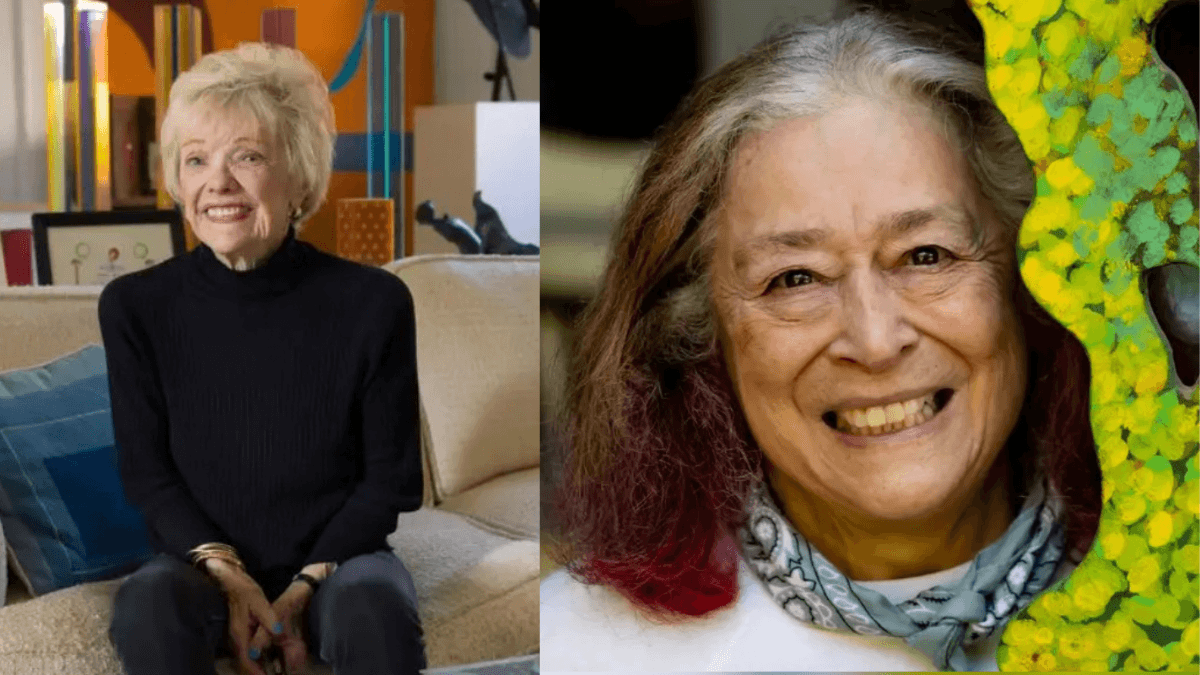
Lisa Mcnear grew up with a strong California lineage and a family history shaped by privilege, inheritance, and vast ranchlands. Her mother, Mary Ernestine Nickel, came from a cattle empire linked to the Miller & Lux era, with an estimated 3 million acres across California, Nevada, Oregon, and Idaho, while her father, Oliver Lombardi, was a prominent insurance broker in San Francisco’s professional class. Still, from an early age, she wanted to follow her own trail.
At UC Berkeley, her architecture major gave her an education that later influenced her sculpture, combining builder’s precision with artist’s whimsy. Rather than making her family’s wealthy ranchlands the center of her life, she turned toward a creative world of studios, galleries, cut wood, paint, and restless creatives moving toward the avant-garde, developing an artistic direction rooted in sculpture, precision, and the freedom of an artist.
Lisa McNear’s Marriage, Divorce, and Family Estrangement
A Marriage That Changed the Family
Richard, a journalist, married Lisa McNear in 1967, when she became 22, in Carson City, Nevada. Together, they had two sons, Tucker in 1969 and Buckley around 1971. The marriage later ended in March 1976, with their divorce in San Diego creating a major family shift. Richard received full custody, while the boys were still very young, about six and about five. From then on,
McNear had restricted touch along with her children, and this absence became an essential part of their lives and the broader family story. In tracing family histories like this, I find that custody modifications can explain how relationships develop over the years, however they no longer with the aid of themselves provide an explanation for each non-public choice.
| Category | Details |
| Full Name | Lisa McNear |
| Known For | Artist and sculptor |
| Education | University of California, Berkeley |
| Field of Study | Architecture |
| Art Style | Large-scale wooden sculptures |
| Art Subjects | Fruit, animals, trees, dice, and everyday objects |
| First Marriage | Richard Warner Carlson |
| Marriage Year | 1967 |
| Children | Tucker Carlson and Buckley Carlson |
| Divorce | 1976 |
| Second Marriage | Michael Vaughan |
| Second Marriage Year | 1989 |
| Notable Art Period | 1980s |
| Later Income | Art sales and oil and gas royalties |
| Place of Death | Cazac, France |
| Date of Death | October 14, 2011 |
| Age at Death | 66 |
| Legacy | Remembered for her distinctive art, family history, and estate dispute |
A New Household and a Different Direction
After Richard remarried in 1979, the boys had a stepmother and a new household. Meanwhile, McNear’s path moved toward Los Angeles and farther afield, as the family’s centripetal force gradually loosened and eventually vanished. For her sons, the estrangement became lifelong, while for McNear,
it formed part of a broader redefinition of her life. She increasingly described her path through the idea of a bohemian artist, unmoored from tradition and, over time, from her past. Her changing artistic identity, independence, separation, and distance from earlier family ties all became connected with this new direction.
Art and Bohemia
A Surreal Style in Wood
Starting with her creative orbit, McNear’s art developed through camaraderie, critique, and artistic momentum around notable names such as David Hockney and Mo McDermott. Her tactile, audacious approach used large-scale wooden sculptures to transform oversized fruit, animals, trees, dice, and everyday objects into surreal forms that could feel both playful and uncanny.
With the sculptor McDermott, an artist known for a bold temperament, she shared studio space, arguments, and a commitment to making things bigger, stranger, and alive. During the 1980s, she exhibited intermittently in Los Angeles, including at Molly Barnes’ gallery in 1983 and 1984. Her work drew reviews that called it cheerful, disturbing, and sometimes camp, creating a bright contradiction through wood, color, and sculpture.
A Life Built Around Art
After McDermott’s death in 1988, her artwork continued evolving, eventually alongside British painter Michael Vaughan, whom she married in February 1989. Their collaboration took them between the Sea Islands of South Carolina and a village in southwestern France, later leading to joint presentations, including a 2010 show at London’s Redfern Gallery. She lived simply even though she came from a background that could have offered more. Her income came from selling art
and later from oil and gas royalties tied to family land leases in the 1990s. Her work was respected in galleries and, in small corners of the art world.. She never became widely known. She never rode the wave of fame or reached the center of the spotlight. The image of her as a comet, brilliant to those who saw her but invisible to most, captures the unusual place her art career, financial support, family land, royalties, recognition, and audience occupied.
Later Years, Royalties, and Estate
A Legacy Shaped by Family and Inheritance
Starting with the estate and its legal journey, the 2019 court ruling became an important part of how Tucker and Buckley retained their shares, including royalties connected to family properties. The dispute showed the lasting persistence of family issues and the estate’s value,
while the court, ruling, probate, litigation, and appeals brought earlier decisions back into focus decades later. The case also reflected the family’s fractured bonds, with the legal process becoming an echo of choices made long before.
McNear’s Final Years and Estate
Vaughan died in 2003, leaving McNear widowed but still working. She later died from breast cancer on October 14 2011 in Cazac, France. Her legacy was tied not only to her public record and exhibitions, but also to family ties and inheritance. Probate proceedings in Kern County, California became a second act in the story.
The estate was initially treated as intestate, with two-thirds going to her sons, Tucker and Buckley, and one-third assigned to Vaughan, who had predeceased her. A will later surfaced stating that everything should go to Vaughan, leading to further litigation and appeals involving the court, shares, property, and royalties.
Conclusion
In recent years, conversation approximately Lisa Mcnear has resurfaced, regularly thru the lens of her son’s upbringing in preference to direct assessments of her art or creative lifestyles. After the loss of life of her former partner, Richard Carlson, on March 24, 2025, obituaries and social media posts delivered attention back to her family history, absence, and the formative role it could have had in Tucker’s upbringing.
With no most important new controversies or revelations, her story stays a complex tapestry of privilege, deliberate exile, own family connections, and the short flare of a one of a kind inventive lifestyles, showing how a person’s history can continue to form public discussion lengthy after the principle activities have passed.
FAQS
Who changed into Lisa McNear?
Lisa McNear was an American artist diagnosed for her one-of-a-kind timber sculptures and unconventional artistic style.
When did Lisa McNear die?
Lisa McNear died on October 14, 2011, in Cazac, France.
Who became Lisa McNear married to?
She turned out to be married to journalist Richard Warner Carlson and later to British painter Michael Vaughan.
How many kids did Lisa McNear have?
Lisa McNear had sons, Tucker Carlson and Buckley Carlson.
What does Lisa McNear regard in paintings?
She created massive wooden sculptures featuring playful and unusual paperwork along with fruit, animals, bushes, dice, and normal objects.
What occurred to Lisa McNear’s belongings?
Her assets have turned out to be troubled in a felony dispute over inheritance, inclusive of royalties related to family homes. A 2019 courtroom ruling allowed her sons to keep their stocks.
