

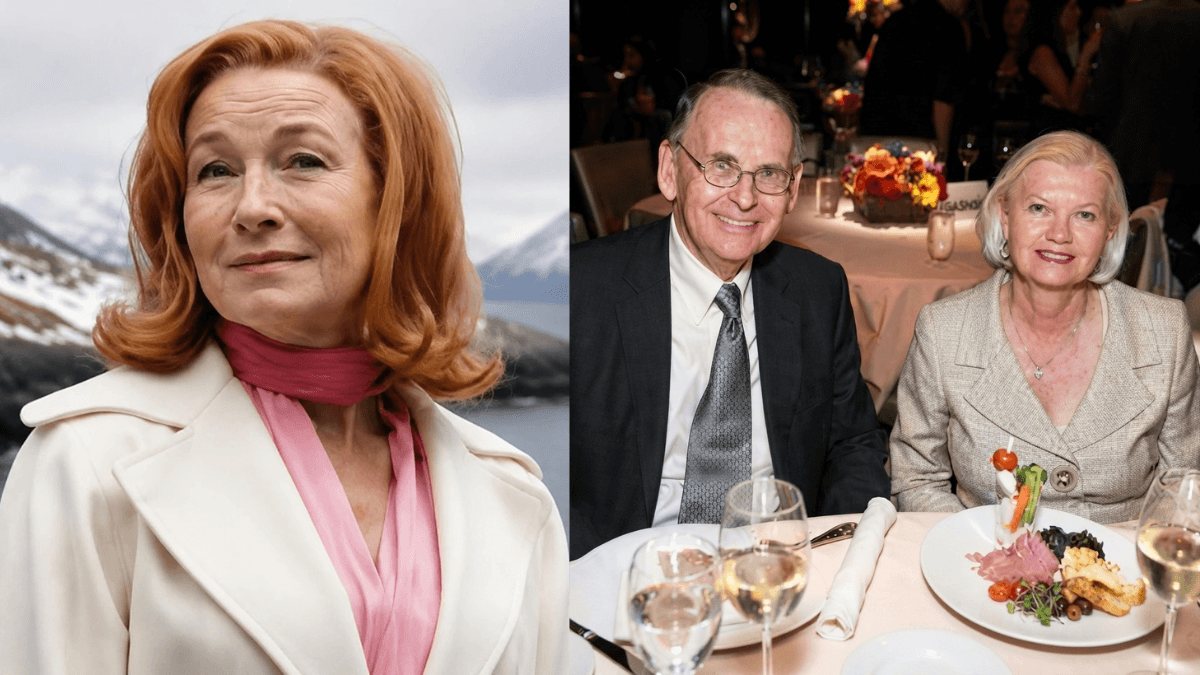
When I examine Kjellfrid Irene Andreassen, her existence stands out as a bridge among worlds. Her early start and upbringing in Norway, especially along the rugged, icy coasts of northern Norway, shaped one aspect of that story, even as the wide, sunlit plains of Texas have become a part of the opposite. Her Norwegian beginning, wartime early life, and scientific schooling help provide an explanation for the path from Norway to the USA. Her education as a nurse and midwife gave her practical revel in earlier than emigration, and her later paintings as a governess added any other chapter to her biography.
In my view, these info make her tale extra than a simple family profile, due to the fact they display how transatlantic migration may want to reshape an ordinary circle of relatives’ lives. Her marriage to a Swiss-born engineer and her function in raising two children in addition shaped the family story. She is publicly known as the mother of actress Renée Zellweger, despite the fact that her own tale stays quietly luminous instead of broadly documented.
Family records, genealogical listings, and every mainstream profile may additionally hold different info, along with a said loss of life 12 months. That detail should therefore be treated carefully when discussing genealogy, records, death, and year information. Looking at her medical background, Norwegian roots, United States experience, Texas setting, children, family, and profile together gives a clearer picture of the woman behind the familiar connection to her daughter.
Kjellfrid Irene Andreassen’s Northern Childhood and Nursing Training
A Childhood Shaped by Northern Norway
Kjellfrid spent her formative years a long way north of Norway, in which the panorama of fjords, wind, and winter light have become part of daily existence. I locate that info like weather and apparel can regularly give an explanation for a place higher than vast descriptions, and here they assist display how the northern setting could form man or woman. Her formative years reminiscences, shared through her daughter’s accounts,
consist of wartime testimonies about groups residing through profession and struggle. Some stories describe youngsters playing in locations in which relics of struggle have been still ready, developing a weird, hard-edged lore that stayed inside a circle of relatives reminiscences. The experience left an imprint. I felt the experience. It was a durable imprint that felt like ancestral grit. That ancestral grit stayed with the family even after they crossed oceans. The family still carries that experience and that durable imprint in their hearts.
| Quick Bio | Details |
| Full Name | Kjellfrid Irene Andreassen |
| Birthplace | Northern Norway |
| Nationality | Norwegian |
| Known For | Being the mother of actress Renée Zellweger |
| Professions | Nurse, midwife, and governess |
| Husband | Emil Erich Zellweger |
| Husband’s Background | Swiss-born engineer |
| Children | Drew Zellweger and Renée Zellweger |
| Daughter | Renée Zellweger |
| Daughter’s Birth | April 25, 1969 |
| Later Residence | Texas, United States |
| Family Background | Norwegian, Swiss, and American influences |
| Public Profile | Primarily known through her family and daughter |
| Reported Death | Mid-1990s in some genealogical records; details vary by source |
Training in Nursing and Midwifery
After that background Kjellfrid trained as a nurse and as a midwife. This training gave Kjellfrid a career based on hands-on service. In communities, nursing and midwifery required technical skill, calm emotion and a quiet authority. These skills helped Kjellfrid later as an emigrant as a governess and, as a mother. Her work remained connected to service, while communities, nursing, and midwifery required a practical approach, professional skill, emotional strength, steadiness, and authority.
Migration, Employment, and Texas Life
From Norway to a New Life in Texas
As a young adult, Kjellfrid emigrated to the United States, beginning an important change in her life. Her first American role was working as a governess for a family in Texas. I see this kind of move as an intersection of continuity and change because governess was keeping ties while adapting to a new landscape.
Texas during the mid-20th century had horizons and different rhythms, from northern Norway so moving between these settings called for flexibility and resolve. Her emigration, work, and experience as a governess connected her Norwegian background with her growing American life, while family, cultural traditions, Texas, and Norway remained meaningful parts of that transition.
Marriage and a Blended Family
Her marriage to Emil Erich Zellweger, a Swiss-born mechanical engineer and electrical engineer, followed in the 1960s. Their union brought Norwegian origins and Swiss origins together within an American household, where the couple raised two children. Their elder son, Drew was born on February 15 1967 followed by their daughter, Renée born on April 25 1969.
This blended cultural household became a global part of the family’s life with family, travel, curiosity and the international sensibility that family says was passed to the children. The story brings together marriage, Swiss, Norwegian, and American influences, along with household, origins, son, daughter, birth, cultural connections, and travel.
Roles and Vocation: Nurse, Midwife, Governess, Mother
A Life Built Around Care and Service
The public descriptions of Kjellfrid display a life shaped by way of constant, home, and expert roles. Her indexed occupations as a nurse, midwife, and governess connect her existence with caretaking, education, and provider. I find these styles of roles in particular beneficial whilst understanding a person’s tale because they display everyday work that might not seem in formal information. Nursing and midwifery located her close to intimate thresholds concerning existence and contamination, even as governing required pedagogical persistence, the capacity to manage family gaining knowledge of, and a strong feel of stewardship.
Her work as a person serving others also reflected practical professional work, caregiving, and learning. Motherhood became another important vocation, built through day-to-day labors rather than achievements listed on résumés. The steady, repetitive tasks of caring for a child helped provide the scaffolding for a child’s future, connecting motherhood, household, and family formation. Her story is not centered on public accolades, professional honors, or public offices attached to her name. Instead, the narrative focuses on lived labor, quiet competence, domestic and professional responsibilities, family, formation, labor, and roles that shaped her private life.
Presence in Public Memory
A Family Story Rather Than a Public Profile
The visibility of Kjellfrid is essentially biographical and familial, with public mentions often performing via her daughter’s life tale. Her immigrant roots, youth anecdotes, and cultural impacts assist explain elements of the next generation and the circle of relatives narrative that connects exclusive continents. She is usually offered as an immigrant mother whose roots, youth, and culture stimulated her family.
There aren’t any acknowledged standalone documentaries centered on her as a subject, and she or he has not commonly seemed in essential profiles as an independent public figure. Instead, her biography and profile have an assisting vicinity inside a much broader circle of relatives story, showing how one character can remain part of public reminiscence while not having a separate documentary or sizable media presence.
What Genealogical Records Preserve
Genealogical statistics and family-tree listings can maintain granular details which can be lacking from broader biographical sketches. These may additionally encompass unique dates, residences, and a suggested dying 12 months inside the mid-Nineteen Nineties, despite the fact that such information can differ among resources. The difference among own family-report detail and mainstream biography is important whilst analyzing public memory due to the fact records
regularly maintain intimate statistics that wider profiles miss. Some records may additionally remain behind paywalls or inside local archives, at the same time as broader existence themes journey greater extensively. For this reason, records, family tree, family tree, dates, houses, demise, year, and the 1990s can upload beneficial context to her biography, helping keep facts, reminiscence, and information of her existence subject matters.
Conclusion
The biography of Kjellfrid is pleasantly understood via the info of her everyday life, instead of a ceremonial public presentation. Her story feels tactile, marked through the constant cadence of nursing shifts, the instruction of a governess, and the quiet rituals of own family food. With modesty at its center, there may nonetheless be a robust narrative gravity in her enjoyment.
Her migration reflects a double motion of leaving and arriving, while telling and being told connect her personal story with a wider international movement. I find the idea of a quiet ledger useful here, because her care, family beginnings, nursing, shifts, governess work, family,
and meals show how ordinary movement and personal beginnings can shape a lasting story. Her biography remains fragmented across interviews, family trees, and public profiles, yet those pieces show how ordinary work and private histories can sustain the more visible trajectories that followed. The house she helped build did more than shelter her two children. It seeded stories that would eventually reach stages far beyond its walls. Through family, history, work, children, stories, and influence, her household became part of a broader profile preserved through genealogy and interviews.
FAQS
Who became Kjellfrid Irene Andreassen?
Kjellfrid Irene Andreassen turned into a Norwegian-born girl diagnosed publicly as the mom of actress Renée Zellweger.
Where was Kjellfrid Irene Andreassen born?
She was born and raised in northern Norway, wherein she spent her early life.
What grew to be Kjellfrid Irene Andreassen’s career?
She was knowledgeable and worked as a nurse and midwife. She also worked as a governess after moving to the US.
When did Kjellfrid Irene Andreassen flow into the us?
She emigrated to America as a younger individual and later lived in Texas.
Who changed into Kjellfrid Irene Andreassen’s husband?
Her husband turned out to be Emil Erich Zellweger, a Swiss-born mechanical and electric powered engineer.
How many youngsters did Kjellfrid Irene Andreassen have?
She and Emil Erich Zellweger had youngsters, Drew and Renée Zellweger.
When was Renée Zellweger born?
Renée Zellweger was born on April 25, 1969.
What is the notion about Kjellfrid Irene Andreassen’s family’s ancient past?
Her ancient past connects Norwegian roots with Swiss and American family influences via her marriage and youngsters.
When did Kjellfrid Irene Andreassen reportedly die?
Some genealogical records file her loss of existence within the mid-Nineteen Nineties, no matter the fact that this element is not continuously given for the duration of mainstream biographies.
Why is Kjellfrid Irene Andreassen diagnosed publicly?
Much of her public popularity comes from her connection to her daughter, actress Renée Zellweger, at the same time as data of her personal lifestyles are specially preserved through a circle of relatives, facts and biographical references.
