

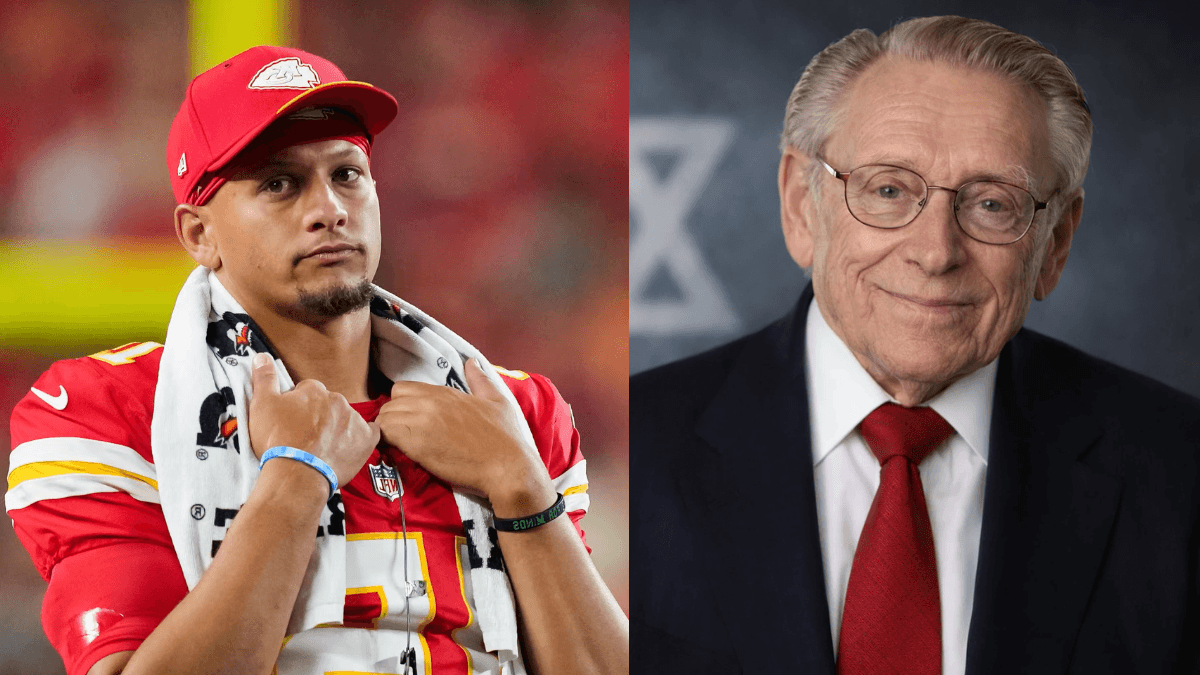
Patrick Mahomes and Larry Silverstein do not share a hometown, an industry, or a generation. One throws footballs for the Kansas City Chiefs, and the other spent decades putting up towers in New York City. Still, people look up both names together, and the reason becomes clear once you see how each man deals with pressure, risk, and rebuilding. This article covers who they are, what they have done, and why their stories work so well side by side.
Why Patrick Mahomes and Larry Silverstein Belong in the Same Conversation
The pairing looks odd at first, so it is fair to be upfront about it. There is no known business deal, partnership, or public event that ties Patrick Mahomes and Larry Silverstein together. What connects them is a pattern. Both took on huge expectations, both worked under constant public scrutiny, and both are remembered for how they acted when the stakes were highest. That makes the comparison useful for anyone who likes sports, business, or a good story about persistence.
We will take each man in turn, starting with the quarterback and then moving to the developer. After that, we will compare how they handle pressure, money, and giving back. Everything here rests on public records and widely covered events, so you will not find invented quotes or secret meetings. If a detail is uncertain, the article says so. Think of it as two profiles viewed through one shared lens.
| Detail | Information |
| Full name | Larry A. Silverstein |
| Born | May 30, 1931, Brooklyn, New York |
| Profession | Real estate developer |
| Company | Silverstein Properties |
| Education | New York University |
| Best known for | Leading the rebuilding of the World Trade Center site |
| Wife | Klara Silverstein |
Patrick Mahomes and Larry Silverstein on Handling Pressure
The comparison between Patrick Mahomes and Larry Silverstein is strongest when you look at how each man acts under stress. Mahomes plays in games where one throw can decide a season, with millions watching. He has often looked relaxed at the worst possible moments, smiling on the sideline when the Chiefs are behind. That calm is not luck. It comes from preparation and from years of practice at not letting a bad play carry over.
Silverstein faced a different kind of pressure, one that lasted years instead of seconds. He dealt with lawsuits, political arguments, design changes, and tenants who walked away from deals. A single bad quarter would have been easy to endure, but this stretched across decades. His answer was steady persistence, a habit of showing up, making the next call, and refusing to let setbacks decide the outcome.
Both men also seem to understand that public trust is earned slowly. Mahomes has built it through consistent performance and a friendly public image. Silverstein built it by finishing buildings and standing in front of cameras during hard moments. Neither approach is flashy, and neither works overnight. Over time, though, each one turned patience into credibility, and that is a large part of why people keep paying attention.
Patrick Mahomes: Early Life and Texas Roots
Patrick Mahomes was born in Tyler, Texas, in 1995 and grew up around professional sports. His father, Pat Mahomes, pitched in the major leagues for several teams over more than a decade. Young Patrick spent plenty of time in big league clubhouses, watching how veteran athletes prepared, joked, and handled bad days. That early exposure gave him a calm, almost relaxed way of carrying himself around high-level competition.
At Whitehouse High School, Mahomes played quarterback in the fall and baseball in the spring. He was good enough at baseball that the Detroit Tigers selected him in the 37th round of the 2014 draft. He chose college instead and signed with Texas Tech, where he planned to keep both sports going for a while. The choice to focus on football turned out to be one of the most important of his life.
Baseball left a lasting mark on how he plays. His arm angles, his quick release, and his habit of throwing from odd positions all echo the freedom of a shortstop making a play on the run. Coaches often say you cannot teach that kind of instinct. Mahomes seems to have picked it up by playing two sports and never being told to throw like everyone else.
Patrick Mahomes at Texas Tech and the Road to the Draft
At Texas Tech, Mahomes played in a pass-heavy offense under coach Kliff Kingsbury. The system gave quarterbacks plenty of chances to throw, and he made the most of them. In 2016 he passed for more than 5,000 yards and threw 41 touchdown passes. He also put up 734 passing yards in one game against Oklahoma, a number that still turns heads when people look back at it.
Not everyone was sold, though. Some scouts worried that he had come from a system that did not look like a traditional pro offense. Others pointed to his improvised style and said it might lead to turnovers at the next level. Those concerns were reasonable on paper. What they missed was how quickly he could process a play and how rarely his creativity turned into carelessness.
The Kansas City Chiefs saw something different. They traded up to select him tenth overall in 2017, a move that raised eyebrows at the time. Head coach Andy Reid, a longtime quarterback developer, wanted him to learn behind veteran Alex Smith before taking over. That patient plan gave Mahomes a full season to study the offense without the pressure of starting every week. It also set up what came next.
Larry Silverstein: A Brooklyn Kid Who Learned the Business
Larry Silverstein was born in Brooklyn in 1931, and his working life began in real estate almost before he knew he was choosing a career. His father, Harry, started the family firm in 1957, which later became Silverstein Properties. Larry studied at New York University and joined the business, learning how to put together deals, read neighborhoods, and keep tenants happy. Those basics stayed with him for the rest of his career.
Over the following decades, he built a reputation as a patient, hands-on developer of commercial buildings. He was not the flashiest name in New York real estate, but he was known for sticking with projects through slow markets. In the 1980s, his company built a skyscraper at 7 World Trade Center, which gave him a close working relationship with the area long before his larger role there.
That early work matters because it explains what happened later. Silverstein was not a stranger who showed up at the World Trade Center site by accident. He knew the neighborhood, the politics, and the people who ran the property. When the chance came to take on a far bigger role, he had the track record and the nerve to do it, even if nobody could have guessed what lay ahead.
Larry Silverstein and the World Trade Center Lease
In July 2001, Silverstein and his partners signed a 99-year lease on the World Trade Center complex. The deal, reported at roughly $3.2 billion, was one of the largest real estate transactions in New York history. It gave his company control of the towers for generations, and it came with the expectation of years of steady rent. Just six weeks later, the attacks of September 11 changed everything.
The days around that date became part of his personal story. Silverstein often took breakfast at the Windows on the World restaurant at the top of the North Tower, but he skipped it that morning because of a medical appointment. Many people lost their lives that day, and the sense of how close fate came to him has shaped how he has talked about the site ever since.
In the days after the attacks, he made a decision that defined his public image. According to a 2017 Daily News interview, Governor George Pataki asked him whether he would put the twin towers back, and he said no. What he did commit to was rebuilding the site. He told reporters that he felt a duty to restore what had been lost, and he stuck to that line through years of delays and disputes.
Conclusion
Patrick Mahomes and Larry Silverstein come from very different worlds, and nothing in the public record links them directly. Yet reading their stories together shows how similar the habits behind big achievements can be. Preparation, steady nerves, and a refusal to quit after a bad stretch show up in both lives, whether on a football field or a construction site.
If you came here for facts, you now have the main points on each man, from birthplaces and early careers to the moments that define them. If you came for ideas, the lessons above apply well beyond sports and real estate. Pick one habit, stay with it, and keep your eyes on the next step. That is more or less what both of these men have done.
FAQS
Are Patrick Mahomes and Larry Silverstein connected?
There is no known business or personal connection between them in public records. People pair the names because their careers show similar traits, such as handling pressure and finishing difficult projects.
What is Patrick Mahomes best known for?
He is the quarterback of the Kansas City Chiefs and has won three Super Bowls and two league MVP awards. He also holds Super Bowl MVP honors from those championship wins.
What is Larry Silverstein best known for?
He is a New York real estate developer who held the lease on the World Trade Center complex and led the rebuilding of several office towers there after the 2001 attacks.
When was Larry Silverstein born?
He was born on May 30, 1931, in Brooklyn, New York, and went on to lead Silverstein Properties, the company his father founded in 1957.
Which buildings did Larry Silverstein help rebuild?
His company developed 7 World Trade Center, 4 World Trade Center, and 3 World Trade Center. The Port Authority built One World Trade Center, and the memorial was a separate project.
Where did Patrick Mahomes go to college?
He attended Texas Tech University, where he played quarterback and set major passing numbers before the Chiefs drafted him in 2017.
Does Patrick Mahomes own part of any sports teams?
Yes. He is a minority owner of the Kansas City Royals, Sporting Kansas City, and the Kansas City Current, which keeps his business interests tied to his home market.
