

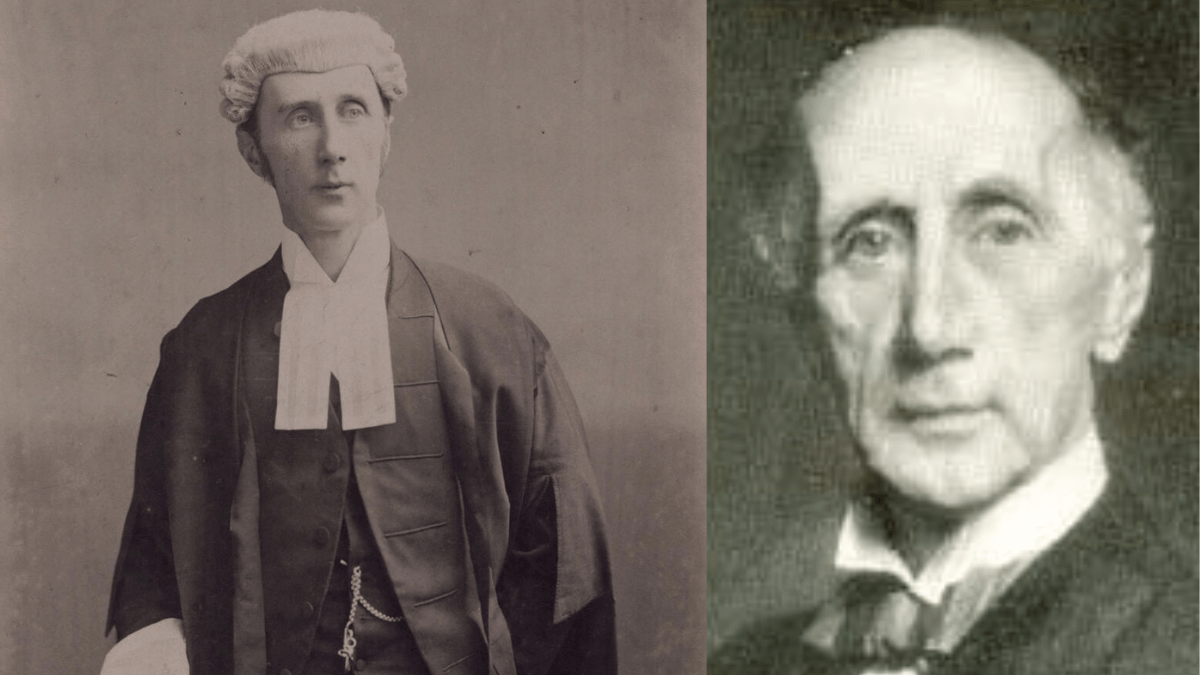
From my perspective, Henry Fielding Dickens gives an exciting example of how the lives of 2nd-technology luminaries can comply with a totally distinct course from that of a famous figure. Born on January 16 1849 in Marylebone, London he was the of ten children born to Charles Dickens and Catherine Hogarth. His name honored Henry Fielding, the known novelist while his family was filled with storytelling, remark and art. Growing up beside such a celebrated father intended dwelling near fame, however his personal course progressively leaned towards common sense in preference to lyric.
At Trinity Hall, Cambridge, he studied arithmetic and earned his diploma in 1872, marking an essential pivot toward regulation. I locate this evaluation specially because his story shows that someone’s vocation no longer ought to reproduce a discern’s theater of letters. Instead, his journey moved from the innovative vibrant theater surrounding his father’s public existence into the measured world of law, offering a beneficial prism through which to understand how family have an impact on, private desire, and personal lives can broaden in one-of-a-kind methods.
Henry Fielding Dickens and His Legal Career
By the time Henry walked into the Inns of Court his mind was already ready for the work that advocacy needed and the picture of him holding a brief in his hand matches the serious way his early career started. He was admitted to the Bar, at the Inner Temple in 1873 starting a career that turned into a long journey based on steady determination instead of fast success. In 1892, he took silk as a Queen’s Counsel,
and in 1899 he became a Bencher of the Inner Temple, strengthening his reputation for able defense and thoughtful judgment. From what I find most interesting about his career, Henry developed his place through forensic clarity and public duty, while his legal work also connected him with the civic life of London as the city moved toward modernity.
| Detail | Information |
| Full Name | Henry Fielding Dickens |
| Born | 16 January 1849 |
| Birthplace | Marylebone, London, England |
| Parents | Charles Dickens and Catherine Hogarth |
| Education | Trinity Hall, Cambridge |
| Degree | Mathematics, 1872 |
| Profession | Barrister and Judge |
| Called to the Bar | Inner Temple, 1873 |
| Queen’s Counsel | 1892 |
| Bencher | Inner Temple, 1899 |
| Common Serjeant of London | 1917–1932 |
| Wife | Marie Therese Roche |
| Marriage Date | 25 October 1876 |
| Children | 7 |
| Book | Memories of My Father (1928) |
| Knighted | 1922 |
| Died | 21 December 1933 |
| Place of Death | St. Luke’s Hospital, Chelsea |
| Burial Place | Putney Vale |
| Known For | Son of Charles Dickens, legal career, public service, and preserving his father’s literary legacy |
On the Bench at the Old Bailey
Beginning as Recorder of Maidstone from 1892 to 1918, Henry gained deep enjoyment in the management of neighborhood justice before receiving a first-rate judicial appointment in November 1917 as Common Serjeant of London, the second senior judge at the Old Bailey. His time there went on until he retired in October 1932 going through years of change and rebuilding which includes war and the shifting moral view of the 20th century. On the bench his calm way of being shaped the court,
where every person on trial and their cases had effects, on lives and the bigger society. A familiar courtroom commentary evaluating him along with his father highlighted the question of inheritance, in particular because Henry wrote judgments, not novels, leaving consequences past the written pages. In 1922, he became knighted in the popularity of his constant and crucial contribution to public life, justice, and public service.
Family Ties and Notable Descendants
Looking at the Dickens family tree, I see a chorus of distinct lives shaped by different professions and experiences across continents. Henry was one of the children of Charles Dickens and Catherine Hogarth, alongside siblings who became editors, artists, soldiers, and civil servants. Mamie Dickens wrote a memoir, while Kate Dickens Perugini moved within artistic circles. Walter Savage Landor Dickens and Sydney Smith Haldimand Dickens served in the armed forces, while Alfred and Edward emigrated, carrying the Dickens name into new landscapes. Dora Annie died in infancy, while Francis Jeffrey lived between India and North America.
Henry married Marie Therese Roche on 25 October 1876 in London. Her lineage blanketed tune, as she became the granddaughter of Ignaz Moscheles, a pianist and composer, and she or he delivered warm temperature and a robust narrative voice to her family reminiscence. Together they had seven kids, which include four sons and three daughters, extending their own family’s presence in public life. Among those descendants Henry Charles Dickens followed his father into the world of law. Became a barrister while his daughter, Monica Dickens went on to become a well-known novelist.
Gerald Dickens joined the Royal Navy. Rose to the rank of Admiral showing a deep connection to naval strategy and family tradition. Philip Charles Dickens entered business and accountancy, reflecting the era’s emphasis on civic responsibility. Cedric Charles Dickens was killed in the First World War, leaving a deep loss recorded in family accounts. Elaine and Olive Nina also remain part of the family’s family trees and memories. Through later descendants, the Dickens heritage continued through public and literary life, preserved with affection and scholarship.
Anecdotes and Public Life
What stands out to me about Henry is how naturally his public role moved between the stage, the courtroom, and literary memory. During the First World War, he became a reader, using his voice for public readings of Charles Dickens’s works and passages once performed by his father to raise funds for the Red Cross, with reported sums that were impressive for the period. He later became Life President of the Dickens Fellowship, helping protect its legacy and community, and also worked as an author through recollection rather than invention,
publishing Memories of My Father in 1928 and leaving other reminiscences after his death. His strongest courtroom advocacy came from the bar, rather than the bench, especially in 1902 during the defense of Kitty Byron. The case was widely reported, and his spirited defense added to the public debate; although Byron was convicted, her sentence was later commuted after petitioning, showing Henry’s sensitivity to public feeling and the borderlands where law can meet mercy.
Conclusion
The final chapter of Henry’s life came in December 1933, when a motor vehicle struck him while he was crossing the Chelsea Embankment. He died on 21 December at St. Luke’s Hospital, Chelsea, and turned into later buried at Putney Vale. As the closing surviving baby of Charles Dickens, his death felt just like the remaining moment of a much wider family saga, however the tale persevered beyond him. His legacy remains seen via files, dwelling rooms, museums, and degrees, where descendants preserve to feature their very own chapters to Dickens own family story.
FAQS
Who was Henry Fielding Dickens?
Henry Fielding Dickens turned into the son of well-known novelist Charles Dickens. He became a barrister and later served as a judge.
When turned into Henry Fielding Dickens born?
Henry Fielding Dickens was born on 16 January 1849 in Marylebone, London.
What did Henry Fielding Dickens do for a living?
He worked in the criminal career. He has become a Queen’s Counsel, a Bencher, and later a senior choice in London.
When did Henry Fielding Dickens die?
Henry Fielding Dickens died on 21 December 1933 at St. Luke’s Hospital in Chelsea.
Where did Henry Fielding Dickens buried?
He was buried at Putney Vale in London.
Was Henry Fielding Dickens the closest surviving baby of Charles Dickens?
Yes. Henry became the remaining surviving infant of Charles Dickens.
Did Henry Fielding Dickens write a book?
Yes. He published Memories of My Father in 1928, sharing non-public reminiscences of Charles Dickens.
Who was Henry Fielding Dickens married to?
He married Marie Therese Roche on 25 October 1876 in London.
