

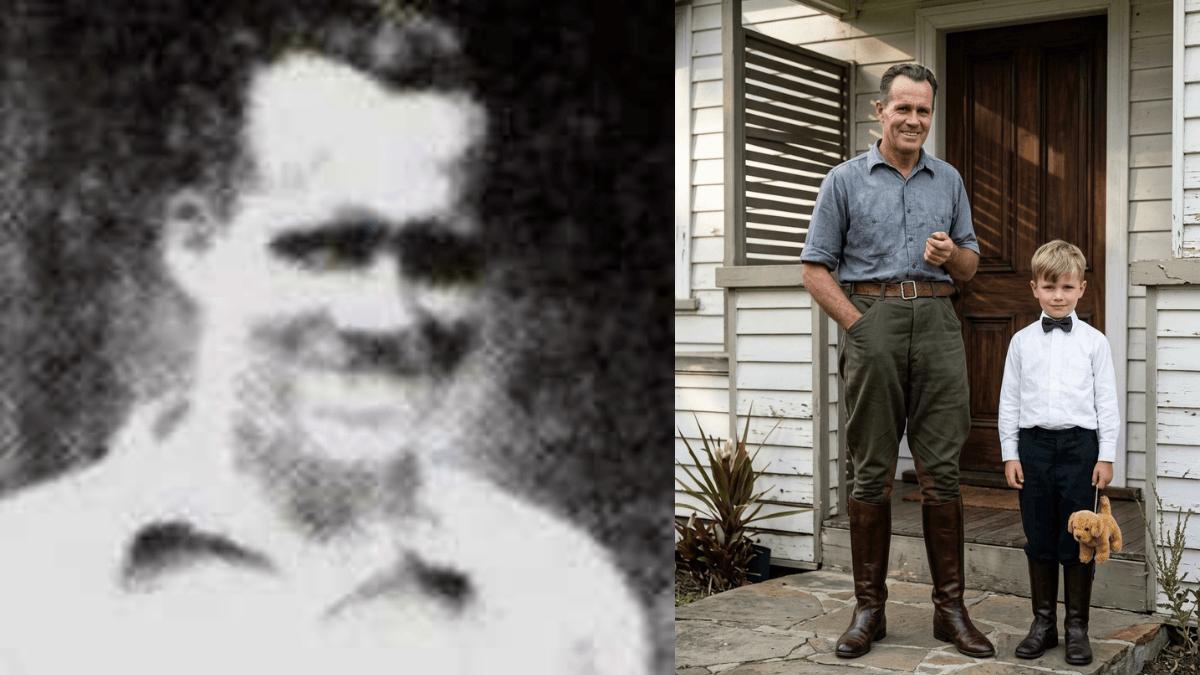
When looking at Russell Whitford Carter, his public impact appears limited, but his family shadow was much larger. He was born September 19, 1897 in Chicago, Illinois and died September 1, 1966 in Grosse Pointe Park, Michigan after a life of 68 years. His story is much less like a title and moreover feels like a mysterious root system under a tall tree in a circle of family history. From my experience researching family records, people like Russell can be easy to overlook, even when they shaped the person who became more publicly known.
Russell’s identity was closely connected with employment, marriage, and place. In available records, he appears as a mill operator or sawmill operator, while a 1930 census transcription identifies him as a real estate salesman. His working life therefore moved between work and commerce, as well as timber, land, and ownership. These details may seem like little candles along a lengthy corridor, but together they add useful depth to his family history and help show how Russell lived and worked.
Lilla and the Shape of the Home
Lilla and the Russell Whitford Carter family story
In the Russell Whitford Carter family story, Lilla appears as an important part of the domestic side of the family. History often presents couples like the weather in a landscape painting: the mountains may be easy to see, but the weather creates the mood. In the same way, Lilla helped shape the family tone inside the home, giving more meaning to Russell’s family stories.
| Detail | Information |
|---|---|
| Full Name | Russell Whitford Carter |
| Born | 1897 |
| Died | 1966 |
| Occupation | Mill and sawmill operator |
| Wife | Lilla A. Carter |
| Son | Charlton Heston |
| Known For | Being the father of Charlton Heston |
| Michigan Connection | St. Helen, Michigan |
Russell Whitford Carter’s children and family line
According to their own family loans and public genealogies, Russell and Lila had three young children: Charlton Heston and Lila A. Heston. These resources contain inconsistent facts, but the simple pattern remains clean. His family consisted of an upcoming actor, a student and some other children whose names would remain in the family tree.
The most famous child, Charlton Heston, was born on October 4, 1923. His biographies often leave Russell hidden, yet the home environment matters because every child is raised within a family before entering the wider world. Although it is impossible to quantify exactly, Russell’s participation in that early atmosphere was important.
The Carter Household and the Family Line
Carter family roots and Michigan ties
The story of Russell begins with the Carter family, whose background was connected with land, development, and Michigan ties. Genealogy records say that Russell’s father was John B. Carter or John Carter, a successful real estate developer and entrepreneur. Russell’s mother was Katie Beatrice Clark. This strong family background gave Russell a name and a spot in a larger family story that later linked to Charlton Heston, a very famous actor of the 20th century. When we look at family histories details like these can explain connections that are not obvious, at first.
A family bridge built through marriage and household life
The Carter family can be viewed as a bridge between the practical American Midwest and the wider cultural world associated with Charlton Heston. That bridge was not created in a single moment but developed plank by plank through marriages, moves, occupations, and the ordinary force of family life.
Russell’s household became an important part of his story when he married Lilla A. Baynes. Family accounts also use related forms of the surname, including Charlton and later Heston. The marriage date often mentioned is November 12 1921. Their union eventually ended in divorce. They had children who carried the family line forward.
Charlton Heston, the Son Who Made the Name Famous
Charlton Heston and the public face of the family
Through his career as an actor, Charleston Heston became the public face of the family, especially through his epic roles, commanding presence, and effective voice as if carved from stone. He grew larger than life, while Russell remained in the quieter registers of record keeping and family memory. Yet Russell’s influence can be seen in Charlton’s early life,
when a family move brought them to St. Helen, Michigan, surrounded by lumber and the northern woods. Russell’s work around sawmills and land helped place the family in that environment, where his son first experienced a world of timber, open space, and practical survival.
Charlton would later become famous playing Moses and Ben Hur, creating a striking contrast between the cathedral of his later fame and the logging camp atmosphere of his beginnings, while the roots of that story remained firmly in the stone of family history.
Lilla A. Heston, the Daughter Who Built Her Own Path
Lilla A. Heston and her place in the family story
The family line took more than one path through Lilla A. Heston, Russell’s daughter, whose life shows that the family history was about more than celebrity. While Charlton entered film and public spectacle, Lilla developed her own separate place through scholarship, performance, and the classroom. She became a professor in the Interpretation Department at Northwestern University’s School of Speech,
while also working as an author, editor, and performer, giving her a substantial place in the family story. In my view, her career shows how a family can be branched like a river delta, moving into different worlds rather than following a single direction, while still sharing the same source.
Alan or Allan Gilbert Heston, the Quieter Branch
Alan or Allan Gilbert Heston and the family records
In the family records, Alan Heston, also listed as Allan Gilbert Heston, appears as another child of Russell and Lilla. The public information about him is limited. That lack of attention doesn’t mean his life had no value. On the contrary it shows he stayed away from the spotlight quietly living a life that didn’t draw notice. Still his existence mattered as much.
Like many family members who stay away from the spotlight, he can still be part of the stage that supports the whole scene. In older family research, every branch matters because without those quieter parts, the wider family story can lose its shape or feel as if the scene collapses. Older genealogies also show that names can shift slightly,
Yet the main family structure remains clear: Russell and Lilla were the parents of at least three children, forming the next generation and creating a household with real depth, rather than simply a straight line of descent.
The Next Generations
Heston’s children and grandkids and Russell’s legacy
The descent of Russell’s legacy into later generations is fascinating, especially through Heston’s children and grandkids who entered public life. Fraser Clarke Heston directed, produced, wrote, and starred, while adopted daughter Holly Ann Heston Rochell remained part of the family line. Later descendants,
including Jack Heston, Ridley Charlton Rochell, and Charlie Rochell, continued the family tradition. This shows how one person can affect many generations. Russell may have been a minor celebrity, but his family was prolific, and as time changed the sound, the original source remained audible through the family’s continuing presence.
Conclusion
The career of Russell reflects a practical working life shaped by the material realities of his era. Depending on the record, he appears as a mill operator, sawmill operator, or real estate salesman, with wood, land, housing, and movement forming important parts of his world. His finances are harder to measure because there is no clear public ledger showing his wealth or income, but his family’s real estate and development background suggests some level of stability for the Carter household. From the records available, his main achievement was not a public trophy but continuity, including the ability to hold a family together and help the next generation move into a wider world.
FAQS
Who turns out to be Russell Whitford Carter?
Russell Whitford Carter dressed as America’s own family man, whose running lifestyle collided with roles involving milling and real estate.
When was the convert Russell Whitford Carter born?
Russell Whitford Carter was born on September 19, 1897 in Chicago, Illinois and changed.
Who turned out to be the wife of Russell Whitford Carter?
Russell transitioned to Leila A. They were married on November 12, 2009.
How many children did Russel Whitford Carter have?
Family and family tree facts show that Russell and Lilla had three younger males, along with Charlton Heston.
What did Russell Whitford Carter do for the property?
Information disclosed at unusual points in Russell’s driving life as a mill manager, sawmill manager and real estate agent.
When did Russell Whitford Carter die?
Russell Whitford Carter died on September 1, 1966 in Grosse Pointe Park, Michigan, at the age of 68.
Why is Russell Whitford Carter diagnosed with grade one disease?
He is especially remembered today through his circle of family tree associated with actor Charlton Heston and full-size Heston circle of family history.
